fig. 26 · automate · review requests
Your happiest customers leave zero reviews. Fix the system, not the customers.
Great work does not produce reviews. Great work plus a system does. Here's the one running at a Kansas City drainage company, where 7 of every 10 finished jobs now turn into a review, and how the automation behind it works.
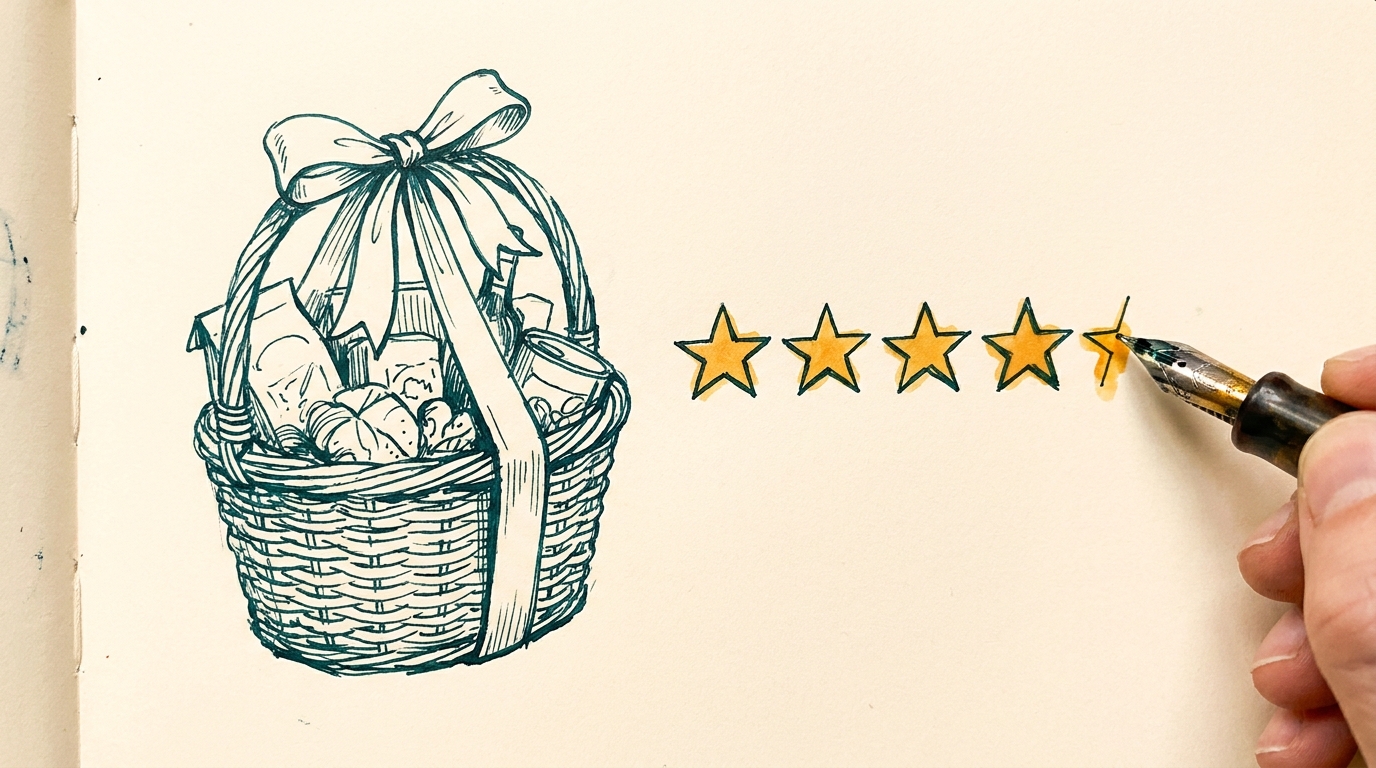
the entire strategy, honestly
fig. 26.1 · why the gap exists
The physics of the missing review
Unhappy customers are self-motivated; they'll find your Google profile at midnight. Happy customers meant to leave a review, then dinner happened. Nobody is lying and nobody is lazy. There's simply no moment in your process where reviewing is the easy, obvious next step, so it never happens. My client High Flow Drainagedid excellent work for five years and had 34 reviews to show for it. That's one review roughly every eight weeks, from a company customers genuinely loved.
fig. 26.2 · the system that fixed it
Thank first, ask second
The insight came from the owner, not from me. Caleb's instinct after a good job was gratitude; my job was making that instinct systematic. So the sequence became: job closes, a real thank-you gift basket goes out, and the review request rides along with it. Someone who just received a gift and a dry basement writes the review. That's the entire psychology, and it never needs to trick anyone.
- The trigger is a finished job, not a marketer's calendar. The request arrives while the crew's work is still the best thing that happened that week.
- The thank-you comes first, and it's real. A basket, a note, a human gesture. The ask is the postscript, not the point.
- The follow-up is polite and finite. One gentle reminder for the people who meant to and forgot. Then it stops. Nobody gets nagged into resentment.
- Every review gets answered, because a profile where the owner replies reads as a company that answers the phone. That part takes minutes a week once the pipeline handles the rest.
- Nothing is filtered or gated. No 'rate us first and we'll decide whether to show you the link.' Review gating violates Google's policies and, worse, it's exactly the kind of trick your customers can smell.
fig. 26.3 · what it did
The numbers, before and after
34
reviews collected in five years, before
80
total within months of the system going live
7 in 10
finished jobs that now leave a review
Reviews compound quietly. They're the strongest signal in local search, they're what AI assistants lean on when someone asks “who's good near me,” and they raise what customers expect to pay before anyone picks up a phone. High Flow's average sale price rose about 15% across this same period, and brand perception, which reviews anchor, is a big reason why.
The automated part is deliberately boring: watching for finished jobs, sending the sequence, stopping when someone reviews, surfacing replies for the owner. Boring is the point. The customer-facing part stays warm and human, and the machinery that keeps it consistent stays invisible. That split is the standard for everything I build.
If your review count embarrasses the quality of your work, that's a solved problem. Twenty minutes and I'll show you the map.
Book the free 20-min audit →or see everything else a trade company can automate