fig. 25 · service · listing automation
List it once. Sell it everywhere.
ListingEngine takes one product record and turns it into six live listings: three Shopify stores, eBay, Amazon and Walmart, each reworded and re-imaged so search engines see distinct pages and customers find you six times. It runs in production today on a 100,000-product catalog.
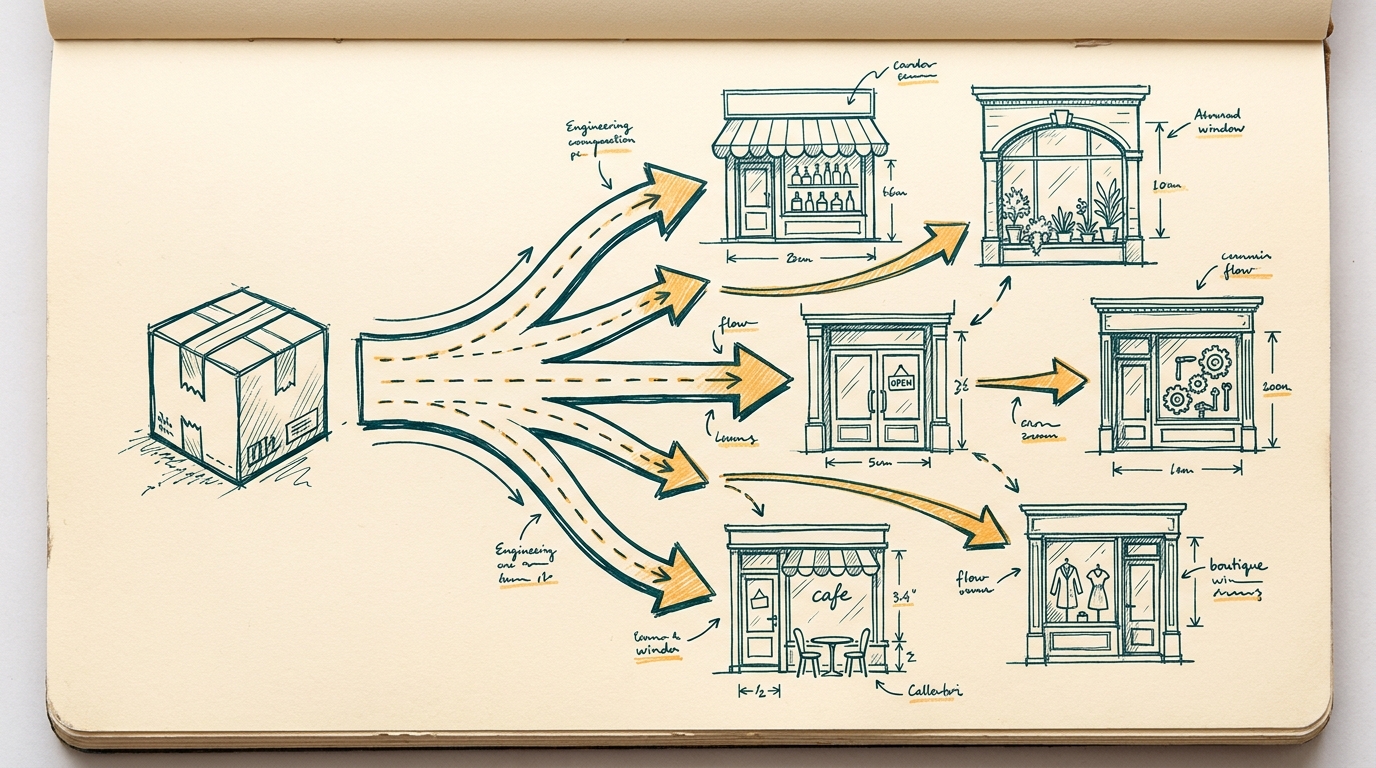
one item in, six storefronts out
fig. 25.1 · the pain, precisely
Six channels means listing everything six times
If you sell on more than one channel, you already know the tax. Every new product means copy-pasting titles, rewriting descriptions so Google doesn't flag duplicates, resizing images to each marketplace's taste, and mapping your fields onto six different forms that all call the same thing by different names. Multiply by a real catalog and it stops being a chore and becomes a department.
The usual answers both disappoint. Cheap syndication tools blast identical content everywhere, which marketplaces tolerate and search engines punish. And listing teams, human ones, are expensive, inconsistent, and bored out of their minds, because this is exactly the kind of patterned work machines should be doing.
fig. 25.2 · how it works
What ListingEngine actually does
- Reads the source of truth. The product record lives once, in your system of record. At the hardware store that's NetSuite; the pattern works from any structured source.
- Rewords per channel. Titles and descriptions are rewritten for each destination, so the same part reads naturally on Amazon, eBay, Walmart and each storefront, and Google sees six distinct pages instead of one page six times.
- Re-images and field-maps. Images are processed to each marketplace's requirements and every attribute lands in the right field, category and format on all six channels.
- Publishes and keeps it true. Listings go live without a human copy-paste session, and the catalog stays consistent as products change. Accuracy at 100,000 products isn't a spring cleaning project; it's a system property.
The strategic payoff is bigger than saved hours. When a buyer searches for a specific part, my client's six listings can occupy multiple result slots at once. For long-tail products, that's the difference between being findable and owning the search page. Its demo film plays in the hero of the homepage.
fig. 25.3 · fit check
Who this is for, and who it isn't
Best fit: retailers with hundreds to hundreds of thousands of SKUs, a real system of record (NetSuite, an ERP, even a rigorously kept spreadsheet), and more than one sales channel, especially parts, components and anything customers search by exact model number. If you're on NetSuite and Shopify together, this is squarely built for you.
Honest counter-cases: if you sell forty artisanal products where every listing is lovingly hand-written, keep hand-writing them; automation would sand off what makes them convert. And if your product data is chaos, we fix that first, because automating bad data just distributes the chaos faster. The pricing guide covers how that phasing works.
Tell me your channel list and catalog size on the free audit, and I'll tell you honestly whether this build pays for itself.
Book the free 20-min audit →or see the Kansas City client it runs for