fig. 23 · service · workflow rescue
Your Zapier setup is held together with hope and duct tape.
You know it, I know it, and the intern who built half of it took the knowledge with them. Workflow Rescue keeps what works, replaces what's brittle, and makes sure the next silent failure isn't silent.
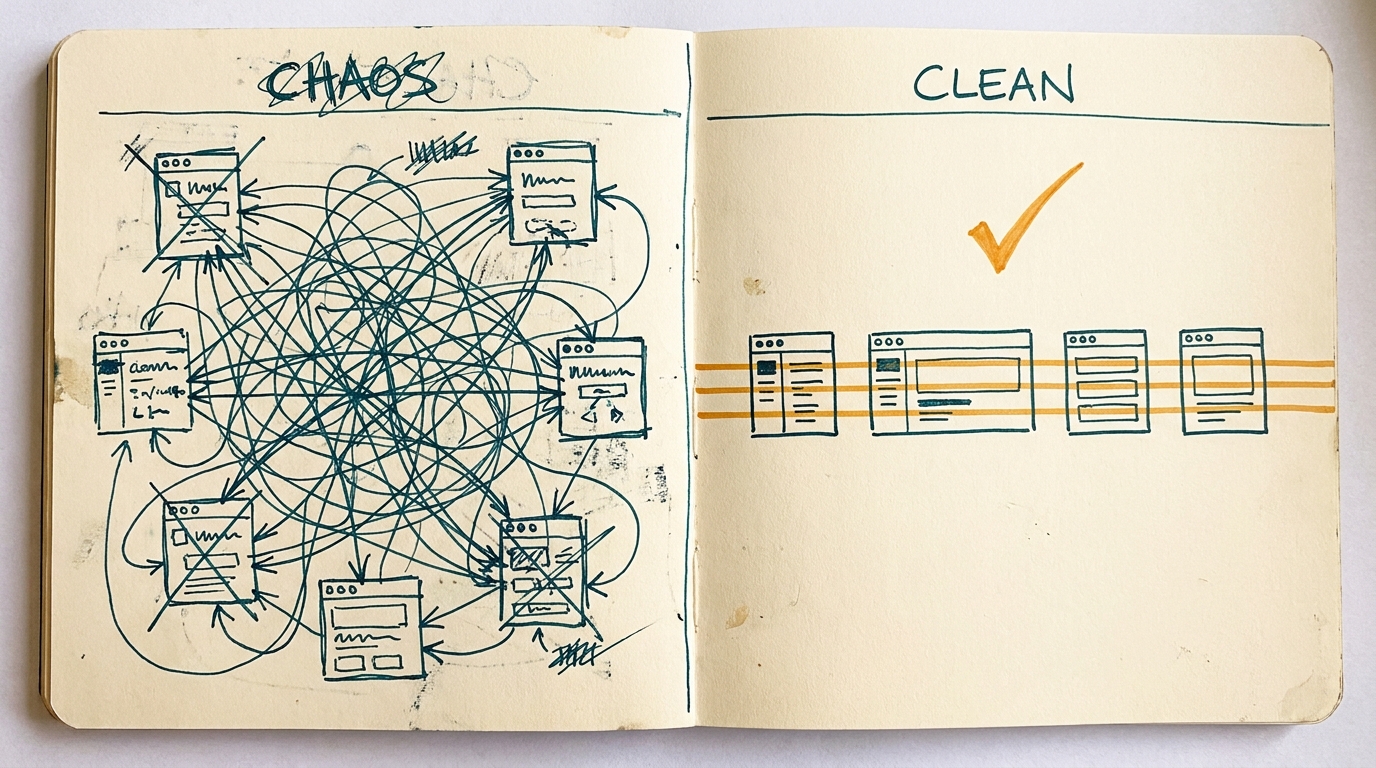
before and after, roughly to scale
fig. 23.1 · the honest part first
This is not an anti-Zapier page
Zapier and Make are good tools, and I recommend them regularly. When a workflow is simple, they're the fastest, cheapest answer, and anyone who tells you otherwise is selling custom code you don't need. My own rule is boring: off-the-shelf when it fits, custom glue where it doesn't.
The trouble starts when a business outgrows the tool quietly. One zap becomes forty. Forty zaps become a system nobody designed on purpose, priced per task, failing in ways nobody notices until a customer asks why they never got their quote. That's not a Zapier problem. That's a “nobody owns this” problem, and it's the single most common mess I get asked to untangle.
fig. 23.2 · the symptoms
Signs you've outgrown the duct tape
- The bill keeps climbing. Per-task pricing means your costs grow with your success. Past a point, you're paying rent on your own busywork.
- Things fail silently. A zap errors, the tool emails an address nobody checks, and the first person to notice is a customer. If your automations don't page a human when they break, they aren't finished.
- Nobody remembers how it works. The person who built it left, or was you two years ago, which is the same thing. There's no diagram, no documentation, and everyone is afraid to touch it.
- The workaround has workarounds. A zap feeds a spreadsheet that triggers another zap that a VA checks manually every morning. Each patch made sense at the time. Together they're a machine for producing 2am surprises.
- You avoid changing your own business because the automation might break. When the tooling starts vetoing business decisions, the tail is wagging the dog.
fig. 23.3 · what rescue looks like
Keep, replace, monitor
A rescue is not a rebuild. Rebuilding everything from scratch is how agencies turn a $2,000 problem into a $30,000 invoice. Instead, the first week is an audit: I map every zap, scenario and script into one diagram of what actually runs, which is usually the first time anyone has seen the whole machine on one page. You keep that diagram whatever happens next.
Then, in order: the workflows that are fine stay where they are. The brittle chains, usually the long ones with five apps and a spreadsheet in the middle, get replaced with plain, owned code that does the same job without the per-task meter. And everything, kept or replaced, gets monitoring that alerts me before it alerts you, a rollback path, and documentation in plain English. That's the same standard everything I build ships with; the pricing guide has the numbers and the questions worth asking anyone doing this kind of work.
The goal at the end is simple to say and rare to have: a system someone owns, that tells you when it's sick, and that any competent developer could pick up tomorrow. No black boxes, no hostages.
Bring me the messiest automation you have. The audit maps it for free, and the map is yours either way.
Book the free 20-min audit →or see what owned systems did for a KC client